

Trojan War is Brihaspati-Tara-Chandra story, Origin of Lunar Dynasty
Greek Mythology narrates Trojan War through many works of literature and mainly in Homer’s Iliad.
Prajapatis (called by greeks as Prōtogonos) born to King Pracheta and his wife Suvarna, spread all over Asia-Europe and started multiplying their races.
One such was Angiras (distorted as Cronus in Greek Zeus ) whose elder son was Brihaspati or Guru (distorted as Zeus in greece).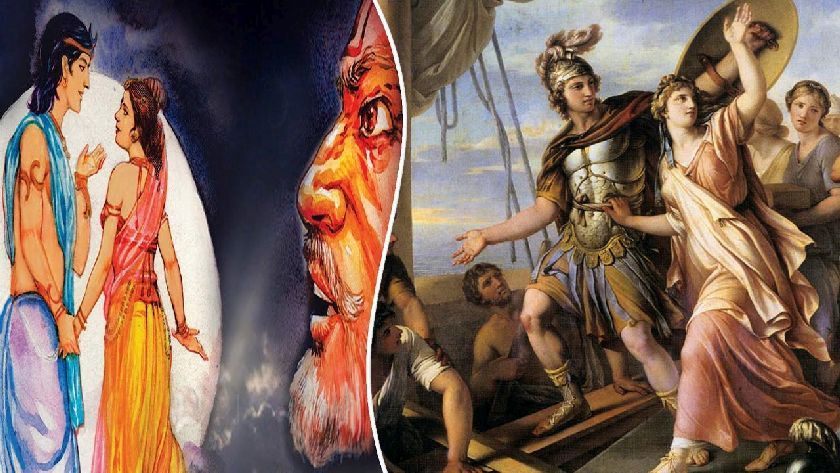
Puranas in India were preserved orally for many years and later composed between 6000 BCE and 1800 BCE (edited till then).
Puranam – pancha lakshanam is the saying. Which means that each Purana is supposed to have 5 attributes.
“Sargascha pratisargascha, Vamso Manvantarani cha, vamsaanucharitam chiva, puranam panchalakshanam”
1. Sarga – which can be chapters or order of creation.
2. Pratisarga – subchapters or secondary creations, mostly re-creations after dissolution.
3. Vamsa – Dynasties or the Genealogy of the great Rishis and the Devas.
4. Manvatara – About Eons or reign of each Manu (present being Vaivaswata Manu)
5. Vamasanucharitam: It should give a detailed description of the dynasties of Kings who lived and ruled this world – mostly, the great Surya Vamsam or the Solar Dynasty and the Chandra Vamsam or the Lunar Dynasty.
Homer composed Iliad around 8th century BCE which is atleast 1000 years after the last purana was edited in India.
The Greek Orphic tradition maintained history without proper writing, so many names, places, incidents, relations must have been distorted over years.
Until christianity took over Europe, Jupiter was the chief deity of Roman state religion throughout the Republican and Imperial eras and Thursday was a holiday as a mark of respect for him.
This Zeus is same as Brihaspati in puranas, who was also called as Guru and his weekday being Thursday (guruvaar). His followers, kings, commanders etc were devas or suras or adityas (aditi’s sons) in puranas.
Similarly, people in middle-east (from Turkey till Iran) followed were daityas as they followed Sukracharya and had holiday on Friday (Sukravaar). They were daityas (diti’s sons) or asuras in puranas.
Their kingdom was Assyrian, which had capital as Asssur is in modern day Iraq. This name sounds similar to Asura.
Even today, people in middle-east and their cult followers across the world use the Sukra as Sukriya (to thank others or show gratitude) and follow Friday holiday tradition.
Sukra was born to Maharshi Bhrigu, who was a prajapati. Puranas say that Bhrigu himself took rebirth as Sukra.
Both Brihaspati and Sukra were disciples of Angiras. But as Angiras was showing partiality towards his son Brihaspati, the more talented Sukra parted ways.
Sukra used to worship Siva in the form of Makkeshwar.
Makha or Magha in sanskrit means fire or lava. So Makkeswar lingam must have been formed from Lava or fallen upon earth as Meteoroid.
Sukracharya is Ahura Mazda, Guru of Titans and Persians
This Sukra is same as Ahura Mazda, who is the creator deity in Zoroastrianism. He is the first and most frequently invoked spirit in the Yasna. The literal meaning of the word Ahura is “lord”, and that of Mazda is “wisdom”. The Avestan language word yasna literally means ‘oblation’ or ‘worship’. The word is linguistically and functionally related to Vedic Sanskrit yajna.
Both Sukra and Ahura Mazda are represented as a man with sword in hand and on white horse both in Indian puranas and Persian history.
Trojan War is Deva and Asura war. Helen of Troy is Tara, wife of Brihaspati
Zeus and the Olympians fought with Titans in a ten-year war called “the Titanomachy” (ἡ Τῑτᾱνομᾰχῐ́ᾱ Τῑτᾱνομαχίᾱ hē Tītānomakhíā). This sounds similar to Tarakamaya War described in Padma Purana.
Troy today is Hisarlik in Turkey and people living to its east side (towards Asia) fought war with King of Sparta (Greece).
Mahabharata, Siva Purana, Vishnu Purana etc mention that Brihaspati’s wife Tara went to the house of Chandra (Soma) and stayed with him.
This Chandra (Soma) is not the celestial body that appears in sky but a human.
Maharshi Atri (one of the Prajapati) and his wife Anasuya had 3 kids with the qualities of Trimurtis.
Vishnu as Dattatreya, Rudra as Durvasa and Brahma as Chandra (Soma).
Chandra and Durvasa left Dattatreya at home and went away.
Tara and Chandra fell in love with each another. He abducted and made her his queen. Brihaspati, after multiple failed peace missions and threats, declared war against Chandra. The Devas sided with their teacher, while Shukra, an enemy of Brihaspati and the teacher of Asuras, aided Chandra. After the intervention of Brahma stopped the war, Tara, pregnant, was returned to her husband. She later gave birth to a son named Budha, but there was a controversy over the paternity of the child; with both Chandra and Brihaspati claiming themselves as his father. Brahma once again interfered and questioned Tara, who eventually confirmed Chandra as the father of Budha.

Similar story is written in Trojan War which was waged against the city of Troy by the Achaeans (Greeks) after Paris of Troy took Helen from her husband Menelaus, king of Sparta.
Historians mistakenly try to find similarities between Trojan War and Ramayana, and assume that Greeks copied adbuction of Seetha by Ravana story and re-wrote it.
But infact, Trojan War story is actually the story of Tara eloping with Chandra and Sura-Asura war.
Greek mythology says Hermes (Mercury or Budha) is son of Zeus (Jupiter or Guru) born through his wife Hera (Tara).
They omitted the Chandra episode here as Zeus raised the child.
They also mixed up Helen of Troy story and assumed her as daughter of Zeus.
Also in greek history, Zeus got mixed up with Indra, who had multiple sexual affairs. Infact Zeus married his sister Hera.
Helen of Troy story matches perfectly with Brihaspati-Tara-Chandra episode in puranas.
Paris and Helen had a son named Agnes (which means Gentle, according to British poet and novelist Robert Graves).
Mercury is called ‘Saumya’ in vedic astrology, which also means gentle.

The events of the Trojan War are found in many works of Greek literature and depicted in numerous works of Greek art. There is no single, authoritative text which tells the entire events of the war. Instead, the story is assembled from a variety of sources, some of which report contradictory versions of the events. The most important literary sources are the two epic poems traditionally credited to Homer, the Iliad and the Odyssey, composed sometime between the 9th and 6th centuries BCE. Each poem narrates only a part of the war.
If we relate those broken parts with puranas, it can be concluded that the Thursday holiday army fought with Friday holiday army for a woman who chose lover over her husband.
After Hermes (Mercury or Budha) grew up came to know that his biological father was not Jupiter but Chandra, he left home and went away.
Skanda Purana states that Budha came to Varanasi and set up a Budheswara Linga and also did Tapasya before he iLa, daughter of Vaivaswata Manu.
They got married and had a son named Pururava, who started a new dynasty called Chandra Vamsam in the name of his biological grand father.
Thus Surya Vamasam and Chandra Vamasam first became their Biological father.
Rudra, disciple of Angiras joined Brihaspati side in war
Rudra, a disciple of Angiras fought war from brihaspati side out of loyalty says Vishnu Purana.
Bhagavata Purana, canto 9, Chapter 14, Sloka 6 states that – Śiva, because of affection for the son of his spiritual master, joined the side of Bṛhaspati and was accompanied by all the ghosts and hobgoblins.
Here they confused mortal Rudra with Siva.
One can name his son after a God but that does not make him god.
Just because these people were born 1 generation after Prajapatis, their names got mixed up with Vedic Gods.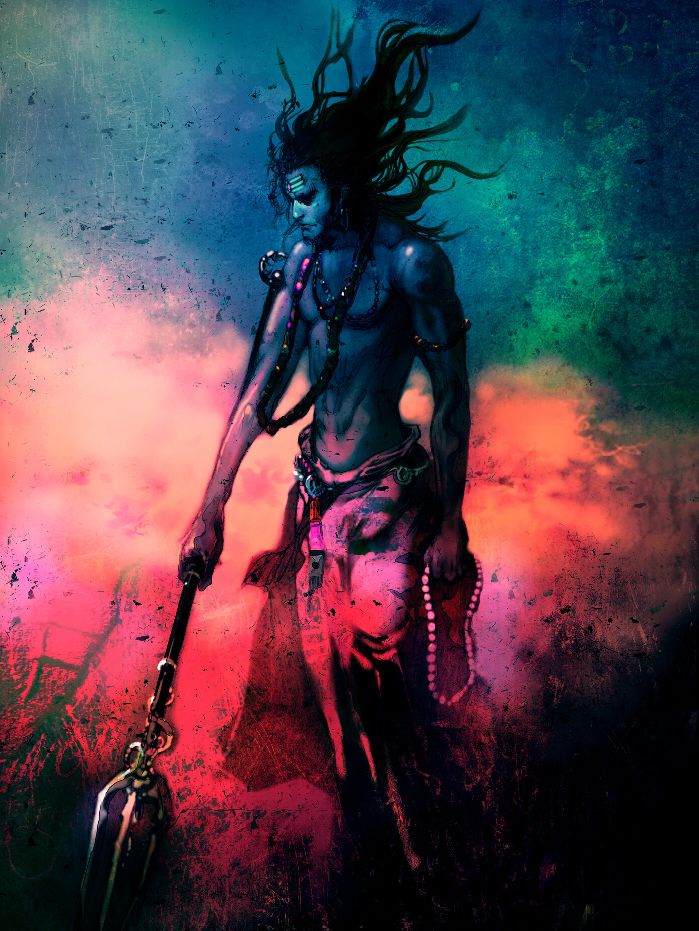
Origin of Week Days Names
It is claimed that naming week days over planets in astrology started with Sumerians and later continued with Babylonians and Greeks.
This claim became popular because no Indian purana or Itihasa mention weekday names.
But Surya Siddhanta written much earlier includes Hora, which is a one hour division of day starting from sunrise and goes in the order of Surya, Sukra, Budha, Chandra, Sani, Guru, Kuja and repeats till sunrise of next day.
Each day at sunrise starts with a hora related to a graha which is considered its weekday.
So, vaara or weekdays existed in India but not written in literature explicitly.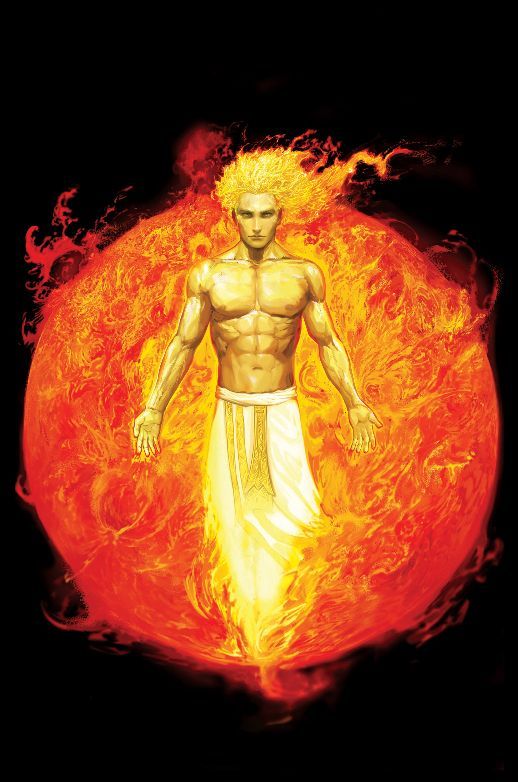
Parasara Samhita written much earlier than Mahabharata by father of Vyasa, mentions weekdays clearly.
It states that Hanuman was born on a Saturday with Moon in Poorvabhadra nakshatra and he found Seetha in Asoka Vatika on Tuesday morning.
The Greeks named the days week after the sun, the moon and the five known planets, which were in turn named after the gods Ares, Hermes, Zeus, Aphrodite, and Cronus.
Romans substituted their equivalent gods for the Greek gods, Mars, Mercury, Jove (Jupiter), Venus, and Saturn. (The two pantheons are very similar.) The Germanic people generally substituted roughly similar gods for the Roman gods, Tiu (Twia), Woden, Thor, Freya (Fria), but did not substitute Saturn.
These greek or roman gods are just named after celestial bodies and they do not represent the actual planets.
Infact in sanskrit, Graha is not just a planet but something that ‘absorbs’ or sends gravitational waves.
Recent studies concluded that planets in solar system send gravitational waves.
Extention of Lunar Dynasty (Chandra Vamsam) across Asia and Europe
Budha and Ila had a son born on mount Puru, so named him Pururava.
He established a kingdom with capital at Pratishtan (modern day Prayagraj) and his sons were Ayu, Amavasu, Vishvayu, Shrutayu, Satayu, and Dridhayu.
Ayu’s son was Nahusha, who married Asoka Sundari.
Their sons were Yati, Yayati, Samyati, Ayati, Viyati and Kriti.
This Yayati Married Devyani, daughter of Sukracharya and also Sharmishta, daughter of daitya king Vrishaparva.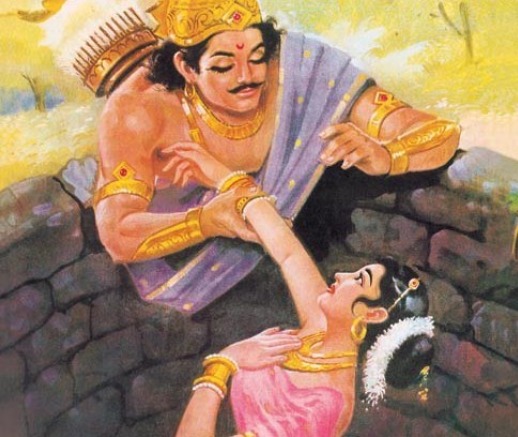
They had 6 sons Yadu, Turvashu, Anu, Druhyu, Prachinvata, Puru and 1 daughter Madhavi.
Each of these sons started own branch of dynasties.
Yadu started Yadava dynasty in which Vasudeva, Krishna etc were born but due to curse of Yayati, they did not take up the throne.
The left over Yadavas after drowining of Dwaraka, traveled towards middle-east and were called Yahudis (Jews).
Turvasu went towards west and started Mleccha or Yavana dynasty. His kingdom was Turvaski which later became Turski and finally Turkey.
Turvaski included Pakistan, Afghanistan, Iran, Iraq, Saudi Arabia, Yemen, Ethiopia, Kenya, Sudan, Egypt, Libya, Algeria, Turkey, Greece.
Descendants of Turvasu, known as Turvasus changed due to linguistic differences to Turvas, Tavras, Tambar and Tomar. Due to political reasons Tomars returned from west region to south through Central Asia and settled in areas around Delhi known as Indraprastha. Since they had come from west, they have been called Yavanas in Sabha Parva of Mahabharata.
The Tomars spread from Delhi to other places in search of better lands and came upto Bhind in Madhya Pradesh. In the seventh century under the influence of new Hindu religion some of the Tomars got inducted into Agnikula Rajputs. Rest who believed in old Vedic traditions remained in Jats.
Kuru II who was descendant of emperor Bharata, started Kuru vamsam and its descendants were Kauravas.
The leftover Kurus after Kurushetra war also traveled towards Middle-East and became Kureshis (Qureshi).
World before start of Satya (Krita) Yuga, Solar Dynasty and Beyond
Vedas, Puranas and Itihasa have recorded world history, centered around present day India much prior to the start of Satya Yuga (Krita Yuga).
First King recorded is Barhi, also known as Prachina Barhi (बरही).
10 generations passed and then in 11th generation, Pracheta (प्रचेता ) was king. His wife was Suvarna and they had 10 sons called Prachetas (प्रचेतस्) , which primarily means the obeservant and intelligent.
These 10 were also the Prajapatis.
Rig Veda Mantra I.41.1 says that ‘pracetas, refers to men of knowledge, the men who are learned and wise’.
There must be a connection between Prajapati in Rig Veda and Prōtogonos (Ancient Greek: Πρωτογόνος, literally “first-born”) of the Greek Orphic tradition, or both must be refering to same persons as Greek history got mixed into puranas later.
The original list of 10 prajapati includes : Marichi, Angiras, Atri, Pulastya, Pulaha, Kratu, Vasishtha, Daksha, Bhrigu, Narada.
They were meant to create different races at different places in the world and their creative role varies.
Pulaha was meant to create kimpurushas (aliens = kim + purusha) etc.
Pulastya was one prajapati who was also known as Pulastya Brahma for the multiple races he created.
Pulastya race settlement is today called ‘Palestine‘, and his grand son Ravana assembled asuras from middle-east, Patala (South America), Africa and India to form an army.
Greeks called this race as Philistines around 12th century BCE.
One of the prajapati, Daksha had 2 wives – Prasuti and Aksini.
Their daughters including Svaha, Khyati, Sati, Aditi, Diti, Danu, Kadru, Vinata, Rohini, Revati and Rati, along with sons called Haryasvas and Sabalasvas.
Daksha lived in Dakshramam which is present day Andhra Pradesh.
Aditi married Kashyapa (who later inhabited Kashmir valley). Their children were Indra, Surya, Bhaga, Varuna, Mitra, Aryaman, Savitr and Vamana.
Here Indra, Surya etc were humans who ruled over certain land parts but not gods as described in Vedas. Vamana also was a human who was later regarded as Vishnu avatar.
This Surya had children as follows : Vaivasvata Manu, Yama, Yami, Ashvins, Revanta, Savarni Manu etc.
This Vaivasvata Manu (Vivaswan) also referred to as Shraddhadeva or Satyavrata and is the progenitor of humans after the Great Deluge which occured during this era. His descendant Ikshvaku started the Solar Dynasty (Suryavaṃśa or Ravivaṃśa) in India.
He was guided by a huge fish or Dolphin Matsya Avatar or Noah's Ark.
But Noah’s Ark and other stories do not give geographic location of this deluge.
Mahabharata, Vana Prava, Ch.187 gives details that it happened around Himalayas as entire earth was submerged in water and all surviving humans stepped on highest peak of himalayas called Naubandhana.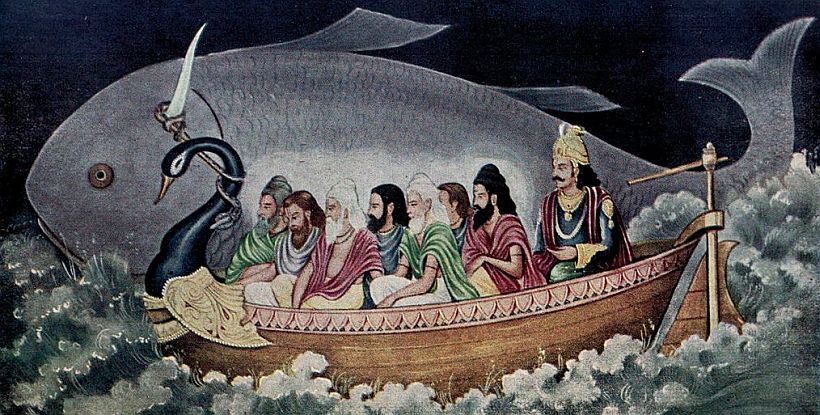

Satyavrata was the king of the Dravida Kingdom during the epoch, according to the Matsya Purana. When he was offering daily prayers in Kritmala river, he got message about upcoming deluge.
After the deluge, Manu’s family and the seven sages repopulated the earth. According to Purana, Manu’s story occured before 28 chaturyugas in the present Manvantara which is the 7th Manvantara.
6 Manvantaras have already passed before the present one, which means that history is much older than what we know.
This narrative is similar to other flood myths like the Gilgamesh flood myth and the Genesis flood narrative.
Vaivaswan’s wife was Shraddha and they had 10 sons Rishabhanatha (Ikshvaku), Dhrsnu, Narishyanta, Dishta, Nriga, Karusa, Saryati, Nabhaga, Pranshu (Vena), Prisadhara along with one daughter Ila.
Mahabharata, Adi Parva, Chapter 175 describes Pranshu Vena Story and how he was killed and later a clone created from his body called ‘Prithu’ and how earth was called ‘Prithvi’ on his name.
Nriga was cursed to live as Giant Chameleon or Dinasaur who got relieved by Krishna later.
After the deluge ended, Vivaswan lived close to himalayas. There were no castes by birth in those days when Satya Yuga started.
It was called Krita Yuga, because everything had to be created (krita) or manufactured.
His son Nabhaga had 2 sons who were engaged in trade. So they were called Vaishyas. Later few of their descendants again took to kingdom and ruling. Ambarisha was from this clan.
Karusa’s sons became warriors. Prasidhara settled with physical labour, so was called Sudra, though born as Kshatriya.
Narishyanta’s descendants were Sakas (Saakya).
Dhrsnu descendants were Dharstaka kashatriyas.
Saryati had one son Anarta who went to west coast and formed his own kingdom with capital as Kusasthali, which was many years later used by Krishna to build Dwaraka.
Saryati’s daughter sukanya married Rishi Chyavana.
Rishabhanatha became Ikshvaku by drinking Ikshu Rasa (sugar cane juice) for survival and built a city Ayodhya with fortification, which was difficult to attack. He started Ikvakshu Dynasty or Suryvansham.
Prabhu Rama was born in this dynasty.
Rishabhanatha later went to vanaprastha as was regarded as a Jina (later as 1st Theerthankar of Jains).
The tradition of making elder son was king and going to Vanaprastha continued in Ikshvaku dynasty till King Aja. It was broken when Dasaratha died at home. Later Rama also did not go to vanaprastha.
All this history proves that they were primarily from South India, who later spread all over India.
The eldest person in a family was called ‘Arya’, which actually means first person. The same word is used in south Indian languages as ‘Ayya’ (elder or father figure).
They were the original Aryans who spread all over India, but not someone who came from Europe.
Greeks came and mingled with Indians in those times, but original aryans already existed here.
Ikshvaku brothers had a sister named Ila, who loved Budha and they got a son Pururava, who spread Lunar Dynasty (Chandravaṃśa or Somavaṃśa) in India on his grand father name.
This Budha (not planet mercury but a human) was born to Greek mother out of an extra marial affair.
World’s first Triplet Test Tube Babies were Vasishta, Agastya and Sudarshana
Ancient Indian Sages Vasishta and Agastya were born as first twin test tube babies born without mother from a pot containing fluid.
Lord Rama narrates story of their ancestor Nimi to Lakshmana.
First Birth and re-birth of Sage Vasishta
Nimi, who was 12th son of the Ikshvaku, built a heavenly mansion near the ashram of sage Gauthama and named it “Vaijayanta” and resided there. He wanted to perform a sacrifice called ‘Satrayaga’ and got permission of his father. He approached the Brahmarshi Vasishta to get the yagna performed. He also invited the great sages Atri, and Bhrugu to conduct the yagna.
Meanwhile sage Vasishta had already agreed to conduct a sacrifice being performed by Indra, king of heaven. He asked Nimi to wait until he returned from Indra’s sacrifice.
But sage Gautama took charge and conducted the sacrifice of the king Nimi! Many were invited for the sacrifice and Nimi performed it with great devotion for 5000 years.
Later sage Vasishta came and saw that the yagna was completed. He desired to have a word with the king and waited for a few hours.
Unfortunately Nimi was fast asleep at that time. Infuriated at this needless delay and for completing the yagna before he returned, sage Vasishta cursed the king to be paralyzed.
Soon king Nimi woke up and was petrified at the terrible curse served by the sage Vasishta. Saying that the delay was unintentional as he was tired and fast asleep, Nimi cursed back sage Vasishta to be paralyzed like him.
As a result of their mutual curses, Nimi and Vasishta lost their physical bodies and took the form of air.
Vasishta went to Lord Brahma to seek for a body, as without a body all karmas will be lost.
Lord Brahma directed sage Vasishta to enter into the ‘tejas’ of Mitra-Varuna and be born differently, not from a mother’s womb.
By performing great tapas he can come back to him. As directed by Lord Brahma, Vasishta came to the place where Varuna-Mitra were performing yagna.
Urvasi, the most beautiful apsara arrived there and Varuna made amorous advances to her.
But she rejected them saying that she had already given word to Mitra. Varuna released his ‘Veerya’ (sperm) in the divine Pot called vAsatIvara. When Urvasi went to Mitra, he called her a seductress and rejected her as her heart was on Varuna. He cursed her to take birth on earth and live there for some time. Pururava, the son of Budha shall be her husband. Mitra too left his ‘Veerya‘ in the same divine pot where Varuna had deposited earlier.
From this mixed Veerya of Mitra and Varuna, twin sages were born.
First born was short man Agastya. That is why he was known as Kumbha-Sambhava (born out of a pot).
Agastya immediately declared that he was not son of Mitra and left that place.
After sometime, Vasishta was born out of that pot with a new body and was called MitraVaruna.
But Ikshvaku recognized the aura behind that soul and asked him to be the mentor of his clan (Ikshavaku Dynasty).
3rd person must have also be out of that pot but not mentioned in Bhagavatam.
Rebirth of Nimi, One who resides in our Eye Lids
After the completion of the yagna, sage Bhrigu was extremely happy and said he would bring back Nimi to life.
Devas questioned Nimi where he wanted to live. Nimi replied that he wanted to reside in the eyes of all creatures in the world.
Devas granted his wish and due to his presence all creatures shall bat their eye lids from there on.
The word ‘Nimesha‘ means split second, in which a living being bats its eye lid once.
Later the sages brought the body of Nimi and placed an ‘Arani’ (Flint Pebble) on it. With holy mantras they subjected the body to severe friction.
Soon a great person came out of the body of Nimi.
As he was born out of severe friction (mithi) he was called “MITHI”, JANAKA, and VAIDEHA (or Videha – from different body). Since he was born out of the body of his father, he was called Janak.
The city ruled by Mithi was called MITHILA. And after this, all 52 kings of Mithila were called Janaka. The most famous Janaka was Seeradhwaja Janaka, father of Sita.
3rd brother of Agastya and Vasishta named Sudarshana
Valmiki Ramayana mentions another brother of Sage Agastya, who was originally named Sudarshana and both resided in hermitages close to each other.
In Aranya Kanda, Sarga 11, after following the pathway indicated by sage Suteekshna, Rama says to Lakshmana that they have entered the hermitage of Agastya’s brother.
They spend one night at that place and next morning, they seek his permission to leave and heads towards Agastya’s hermitage.
If Agastya’s brother was Vasishta alone, he was already living on the banks of river Ganga and cannot be in this forest.
Setu Mahatmya chapter of the Skanda Purana describes the death of this Agastya’s brother.
He prays to Lord Siva for Moksha.
Siva appears and tells him to bathe in the Amritavapi Tirtha, located in what is now the Ekantharama Temple near Rameshwaram.
He does so and attains Moksha.
In the past, during the killing of demons Ila and Vatapi, when Agastya ate Vatapi and digested him, Ila tried to attack and Agastya’s brother, glowing with his own refulgence burnt him down just by his flame-like eyes and doomed him to death. [ Valmiki Ramayana, 4-11-66].
तस्य अयम् आश्रमो भ्रातुः तटाक वन शोभितः |
विप्र अनुकंपया येन कर्म इदम् दुष्करम् कृतम् || ४-११-६७
Translation : This hermitage embellishing with lake and woods belongs to the brother of Sage Agastya who has done this impossible deed just by his compassion towards Brahmans. So said Rama to Lakshmana and Seetha.
Surely there must be a triplet brother to Agastya and Vasishta, but he was not mentioned in Bhagavata Purana, where only first two born were given importance.
But the word Agastya Bhraata(brother of Agastya) became popular and used for someone whose name is not known.
Vasishta Head Dated 3700 BCE found in Delhi !
A copper idol named ‘Vasishta Head‘ was recovered in 1958 from a scrap dealer by D.Anderson in Delhi and is carbon dated to 3700 BCE.
This idol has an inscription of ‘Narayana‘ on it.
3 western universities applied 14 tests, spectrographic analysis, X-ray dispersal analysis and metallography to declare that this idol belonged to 3700 BCE (+ plus or minus 800 years).
However, Vasishta, Agastya and Sudarshana were the first born Triplets without a mother’s womb.
Infact, they were born without ovary from a woman.
Later in Mahabharata, Drona was born similarly from only sperm of a man.
Kripa and Kripi, Dhrishtadyumna and Draupadi were twin bother-sister, who were born in same way (without a mother).
100 Kauravas were also test tube babies, but they were removed from womb of their mother Gandhari and incubated in 100 different pots by Sage Vyas.