
X Chromosome
Consanguineous Relationship discussed in Yama Yami Story
 Rig Veda [10.10] has a conversation where Consanguineous Relationship and invention of night, first death are discussed by Yama and his twin sister Yami.
Yama and Yami were children of Vivasvat (an aspect of Surya, the Sun God) and Saranyu (the Cloud or Aurora) is the primeval human, the first of mortals, and Yama was the first living creature to die and to go to the afterlife where he became the undisputed and feared king.
Once Yami was madly in love with her twin brother Yama. She wanted to have sex with him and pined for the refusal of his brother.
Yami desired that Yama should induce an embryo in her womb. It was a natural instinct that aroused in her mind and body; after she had attained puberty.
Yama replied, ‘I do not like the sexual relation between a male and a female having similar blood. The Gods see everything’.
Consanguineous marriage is now abandoned in most parts of the world as it is proved hazardous for next generations.
The children from such marriages or relations fall prey to hereditary diseases.
This modern scientific concept is presented by Yama in the remote past and is written in the Rig Veda.
Yama says that the Gods look everywhere, while Yami did not bother.
Yami did not feel shame or blush even if the Gods see their coitus. Yama was the first man, in the world, to develop the modesty or blush about sexual mating. He did not like anybody, even the God, to see copulation.
Yami opposed Yama’s opinion and said that even the Gods performed shameful actions in the past, so neglect them and love me and give me a child.
What is shameful in it? Why do you worry to behave naturally? says Yami.
Yami was true that in the past Gods did multiple sins and wrong deeds like cheating others, adultery etc. But they did not produce children from it.
Yama was more worried about next generation that will be produced from this Consanguineous Relationship, as humans transfer their genes and possibility of genetic diseases and shrinking of Y Chromosome in humans can lead to extiction of male population.
Yama states the truth that we should never perform the same mistakes done by our ancestors, but we should correct it and progress.
Yami says, ‘Prajapati (creator Brahma) has joined us together since we were in a womb. Prajapati has made us a couple. We should not go against the rule of nature.’
Yami further says, ‘you are afraid of the sin, which is not a sin at all. Moreover there is nobody to look at our coitus. Then what is the sin?’
Yami suggests that if somebody else sees a bad action, then only it becomes a sin. If it is not seen by anybody, there is no sin at all.
She indicates that society decides what is sin and what is not.
Yami says further, ‘I am anxious to sleep with you and offer my body as a ‘Patni’ (wife) to you.’
Here a word ‘Patni’ is used but the word ‘Vivaha’ is not used.
The word ‘Patni’ [Pat + Ni], where Pat means to lie down and Ni means to carry or to take to.
Then Yama advised her to select another man and get sexual pleasure from him. Which means that Yama was not against the sexual contact of a man with a woman; but he opposed sexual union of the brother with a sister from the same parents.
Yama further told that a time is approaching when marriages between brother and sister will be prohibited. Yama revealed the future which is prevalent in today’s world.
Yama made that rule, which ruled all over the world.
In later days, Rishis formed gotras based on DNA and Y Chromosome maintain the lineage and avoided marriages within the blood relations.
Rigveda 10/12/6 states that Yama once hit his mother, but the context is not mentioned.
It is possible that Yama’s mother might have suggested him to have sexual intercourse with her or might have supported her daughter Yami’s request and Yama had denied it strongly.
Rigveda 10/13/4 states, ‘for the benefit of the mankind who refused immortality and embraced death? In the Yajna of Bruhaspati, Yama sacrificed his beloved body.’
He was the first human to experience death.
Upon her twin brother’s demise, Yami was crying and when Gods tried to console her, she replied, “How can I not mourn, for today is the day of my brother’s death!”
It was always “today“, because time was not yet invented or day and night was happening in an eternal present.
To cure her grief, the Gods created night. From that time, night follows day, and the cycle of time began, because time cures all sorrows.
Only after the death of Yama as human and reincarnated as God of after life, night was invented and time was calculated.

Y Chromosome & Male Lineage, Genetics behind Hindu Gotra System
In Hindu society, the term gotra means clan. It broadly refers to people who are descendants in an unbroken male line from a common male ancestor.
However, all families having same gotra need not be cousins.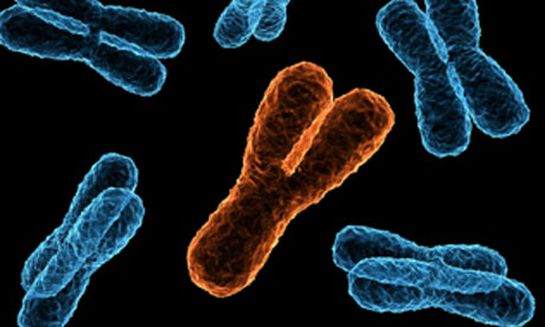
They can be descendants of sons or disciples or even adopted sons of the Rishi(Seer), who is the root and whose name is used as Gotra.
For example if a person says that he belongs to the Kutsa Gotra then it means that he traces back his male ancestry to the ancient Rishi (Saint or Seer) Kutsa.
Gotra means cowshed (Go=Cow, tra=shed) in Sanskrit. Pāṇini defines gotra for grammatical purposes as apatyam pautraprabhrti gotram (IV. 1. 162), which means “the word gotra denotes the progeny (of a sage) beginning with the son’s son.”
This system was started among Brahmins, with a purpose to classify and identify the families in the community.
Hindu Brahmins identify their male lineage by considering themselves to be the descendants of the 8 great Rishis i.e Saptarishis (The Seven Sacred Saints) + Bharadwaja Rishi. So the list of root Brahmin Gotras is as follows :
- Angirasa
- Atri
- Gautam
- Kashyapa
- Bhrigu
- Vasistha
- Kutsa
- Bharadwaja
The offspring (apatya) of these eight are gotras and others than these are called ‘ gotrâvayava ‘.
These eight sages are called gotrakarins from whom all the 49 gotras (especially of the Brahmins) have evolved. For instance, from Atri sprang the Atreya and Gavisthiras gotras.
In almost all Hindu families, marriage within the same gotra is prohibited, since people with same gotra are considered to be siblings.
But the hidden reason behind this practice is the ‘Y Chromosome‘ which is expected to be common among all male in same gotra. So, the woman too carries similar X Chromosome and if married, their offspring may be born with birth defects.
Few families even maintain their Pravara which is a list of all seers through which their Gotra was derived.
It connects to the root Seer.
Gotra is always passed on from father to children among most Hindus, just like lastname(surname) is passed on worldwide. However, among Malayalis and Tulu’s its passed on from mother to children.
Additional rule in the Gotra system is that, even if the Bride and Bridegroom belong to different Gotras, they still cannot get married even if just one of their Gotra Pravara matches.
Now, why only male carries fixed lastname and gotra and why female can change her lastname, gotra after marriage ?
Genes & Chromosomes among Humans
Humans have 23 pairs of Chromosomes and in each pair one Chromosome comes from the father and the other comes from the mother. So in all we have 46 Chromosomes in every cell, of which 23 come from the mother and 23 from the father.
Of these 23 pairs, there is one pair called the Sex Chromosomes which decide the gender of the person. During conception, if the resultant cell has XX sex chromosomes then the child will be a girl and if it is XY then the child will be a boy. X chromosome decides the female attributes of a person and Y Chromosome decides the male attributes of a person.
When the initial embryonic cell has XY chromosome, the female attributes get suppressed by the genes in the Y Chromosome and the embryo develops into a male child. Since only men have Y Chromosomes, son always gets his Y Chromosome from his father and the X Chromosome from his mother. On the other hand daughters always get their X Chromosomes, one each from both father and mother.
So the Y Chromosome is always preserved throughout a male lineage (Father – Son – Grandson etc) because a Son always gets it from his father, while the X Chromosome is not preserved in the female lineage (Mother, Daughter, Grand Daughter etc) because it comes from both father and mother.
A mother will pass either her mother’s X Chromosome to her Children or her father’s X Chromosome to her children or a combination of both because of both her X Chromosomes getting mixed (called as Crossover). On the other hand, a Son always gets his father’s Y Chromosome and that too almost intact without any changes because there is no corresponding another Y chromosome in his cells to do any mixing as his combination is XY, while that of females is XX which hence allows for mixing as both are X Chromosomes.
Women never get this Y Chromosome in their body. And hence Y Chromosome plays a crucial role in modern genetics in identifying the Genealogy ie male ancestry of a person. And the Gotra system was designed to track down the root Y Chromosome of a person quite easily. If a person belongs to Angirasa Gotra then it means that his Y Chromosome came all the way down over thousands of years of timespan from the Rishi Angirasa!
And if a person belongs to a Gotra (say Bharadwaja) with Pravaras (Angirasa, Bhaarhaspatya, Bharadwaja), then it means that the person’s Y Chromosome came all the way down from Angirasa to Bhaarhaspatya to Bharadwaja to the person.
This also makes it clear why females are said to belong to the Gotra of their husbands after marriage. That is because women do not carry Y Chromosome, and their Sons will carry the Y Chromosome of the Father and hence the Gotra of a woman is said to be that of her husband after marriage.
Shrinking size of Y Chromosome
Y is the only Chromosome which does not have a similar pair in the human body. The pair of the Y Chromosome in humans is X Chromosome which is significantly different from Y Chromosome. Even the size of the Y Chromosome is just about one third the size of the X Chromosome. In other words throughout evolution the size of the Y Chromosome has been decreasing and it has lost most of its genes and has been reduced to its current size. Scientists are debating whether Y Chromosome will be able to survive for more than a few million years into the future or whether it will gradually vanish, and if it does so whether it will cause males to become extinct! Obviously because Y Chromosome is the one which makes a person male or a man.
Y Chromosome has to depend on itself to repair any of its injuries and for that it has created duplicate copies of its genes within itself. However this does not stop DNA damages in Y Chromosome which escape its local repair process from being propagated into the offspring males. This causes Y Chromosomes to accumulate more and more defects over a prolonged period of evolution and scientists believe that this is what is causing the Y Chromosome to keep losing its weight continuously.
Y Chromosome which is crucial for the creation and evolution of males has a fundamental weakness which is denying it participation in the normal process of evolution via Chromosomal mix and match to create better versions in every successive generation, and this weakness MAY lead to the extinction of Y Chromosome altogether over the next few million years, and if that happens scientists are not sure whether that would cause males to become extinct or not. And that is because Scientists are not sure whether any other Chromosome in the 23 pairs will be able to take over the role of the Y Chromosome or not.
On the other hand, it is not necessary that humanity will not be able to survive if males become extinct. Note that females do not need the Y Chromosome, and since all females have X Chromosomes, it would be still possible to create a mechanism where X Chromosomes from different females are used to create offspring, say like injecting the nuclei from the egg of one female into the egg of another female to fertilize it and that would grow into a girl child. So yes, that would be a humanity where only females exist.
Gotra System helps to protect the Y Chromosome from becoming extinct
Even modern scientists have concluded that children born to parents having blood relation (like cousins) can have birth defects.
For example, there is a recessive dangerous gene in one person. What this means is that say a person is carrying a dangerous abnormality causing gene in one of his chromosome, but whose effect has been hidden in that person (or is not being expressed) because the corresponding gene in the pairing Chromosome is stronger and hence is preventing this abnormality causing gene from activating.
Now there are fair chances that his offsprings will be carriers of these genes throughout successive generations. As long as they keep marrying outside his genetic imprint, there is a fair chance that the defective gene will remain inactive since others outside this person’s lineage most probably do not have that defective gene. Now if after 5-10 generations down the line say one of his descendants marries some other descendant who may be really far away cousins. But then there is a possibility that both of them are still carrying the defective gene, and in that case their children will definitely have the defective gene express itself and cause the genetic abnormality in them as both the Chromosomes in the pair have the defective genes. Hence, the marriages between cousins always have a chance of causing an otherwise recessive, defective genes to express themselves resulting in children with genetic abnormalities.
So, Ancient Vedic Rishis created the Gotra system where they barred marriage between a boy and a girl belonging to the same Gotra no matter how deep the lineage tree was, in a bid to prevent inbreeding and completely eliminate all recessive defective genes from the human DNA.
A rule about the Gotra System and Marriage in Manusmriti
AsapiMDAchayA mAtur sagOtrAchayA pituH |
sA praShasthA dvijAtInAM dArakarmaNi maithune ||
Translation : When the man and woman do not belong to six generations from the maternal side
and also do not come from the father’s lineage, marriage between the two is good.
Human Mind Cloning Impossible says Rig Veda, Bhagavad Gita
Human Mind Cloning impossible proved Rig Veda and Bhagavad Gita. A.I Robot Bina-48 is a mind storage system. Story of King Prithu, wife Archi cloned from same father Vena but genetically different chromosomes.
Modern scientists claim to have designed an A.I robot, named Bina-48, which can store all information in your mind or rather clone your mind.
But, it is still a robot and it can only save information based on your experiences. It is not actually a clone, which thinks exactly like you in a given situation.
Infact, human mind cannot reproduce 100% of its memory in any known method.
What we use now is only about 20% of our mind power and total memory.
Entrepreneur Martine Rothblatt has created a new robotic head with an idea of uploading the memories, thoughts and feelings of a living person into a computer to create a Mind Clone or “second self.”
Bina-48 is named after Rothblatt’s real-life wife, Bina Aspen, and serves as a proof-of-concept for the futuristic idea. The robot version is designed to carry on a conversation, with scientists hoping that these mind clones could give human owners a sort of artificial afterlife.
But the real question is : your soul has left your body after death and only your memories, thoughts etc are saved in a robot’s memory chip.
How can a robot, responding like you, be your clone or yourself having an afterlife or extended life in a robot body ?
What Bina-48 stores is only a replica of your mind, while the original has left your body along with soul after death.
शरीरं यदवाप्नोति यच्चाप्युत्क्रामतीश्वर: |
गृहीत्वैतानि संयाति वायुर्गन्धानिवाशयात् || – Bhagavad Gita: Chapter 15, Verse 8
Translation : As the air carries fragrance from place to place, so does the embodied soul carry the mind and senses with it, when it leaves an old body and enters a new one.
The phenomenon of transmigration of the soul is explained here. When the soul departs at the time of death, it discards the gross body. But it carries with it the subtle and causal bodies, which include the mind and senses.
While the soul gets a new body in every life, the mind continues journeying with it from past lifetimes. This explains why even people who are blind from birth can see dreams.
Human Cloning in Mahabharata and Vishnu Purana
 King Vena was great but cruel in nature. He banned all Vedic practices and challenged the sacred rituals of Vedic priests. This created immense fury and anger among the sages. One of the sages killed him using his spiritual powers thus ending the tyranny of Vena. When monarchy of vena ended, anarchy took its place and the kingdom became miserable without a king. Sages decided to create a new king from the dead body of Vena.
The sages churned the thigh of the dead king wherefrom came a dwarf clone of vena who inherited the evil mind and qualities of vena. “What shall I do?” asked the cloned king.
Seeing the newly formed clone deficient of king qualities, sages asked him to Nishada (sit down) thereby giving him the name ‘Nishada’.
King Nala and Eklavya of Mahabharata were descendants of Nishada.
Now that all evil was removed from his thigh, Sages then churned the right hand of Vena wherefrom came the healthy illustrious king “Prithu” who inherited all the good leadership qualities of Vena.
How Earth got the name Prithvi
After creating Prithu, the sages created a female from Vena’s body (left side) and named her Archi.
Thus, it was possible to create opposite gender clones from same body, even after its death.
Prithu married Archi and had five sons.
Being ayonija (“born without the participation of the yoni or female genital”), Prithu is untouched by desire and ego and can thus control his senses to rule dutifully upholding Dharma.
Earth has stopped supporting cultivation of crops during evil rule of Vena.
Prithu promised to be earth’s guardian and brought her back to normalcy. This helped life sustain on earth.
Prithu went on to become the universal guardian of entire earth and so, the earth was called as ‘Prithvi’ in Sanskrit.
There was a concept of creating multiple clones from the same dead body but copies of only certain qualities like physical appearance, blood, DNA, few mental abilities could be transferred to the newly made clones.
The actual mind could not be cloned as it left Vena’s body along with his soul.
The female clone Archi is a completely different clone compared to Prithu.
Here, the father (Vena)’s XY chromosomes must have been reprogrammed to create Prithu with desired qualities and then X chromosome seperated, reprogrammed and multipled to generate a new XX chromosome for the female Archi.
Thus, Prithu and Archi were made sure that they were not siblings with same X chromosome, before getting married and extending family.
After acquiring many presents from the gods, Prithu conquered and ruled the earth as well as the Devas, Asuras, Yakshas, Rakshasas and Nagas in all glory. It was where the Satya Yuga reached its pinnacle. Prithu liberated his father Vena, from the hell called Pūt, hence all sons are called Putras. Practicing detachment, Prithu ruled according to the Vedas and the Dandaneeti.
Atharvaveda credits him of the invention of ploughing and thus, agriculture. He is also described as one who flattened the Earth’s rocky surface, thus encouraging agriculture, cattle-breeding, commerce and development of new cities on earth.
Chinese scholar Hiuen Tsang (c. 640 AD) records the existence of the town Pehowa, named after Prithu, “who is said to be the first person that obtained the title Raja (king)“. Another place associated with Prithu is Prithudaka (lit. “Prithu’s pool“), a town on banks of Sarasvati river, where Prithu is believed to have performed the Shraddha of his father. The town is referred as the boundary between Northern and central India and referred to by Patanjali as the modern Pehowa.
Shriman Narayan, one of the protagonists of Indian Panchayati Raj movement, tracing its origin, writes: “It is believed that the system was first introduced by King Prthu while colonizing the Doab between the Ganges and Jamuna.”
Prithu is also mentioned in Bhagavata and Vayu Puranas.
Cloning of RakthaBeeja from his own blood drops
ad a boon that whenever a drop of his blood fell on the ground, a clone of himself would be born at that spot (rakta=blood, bīja=seed; “he for whom each drop of blood is a seed“).
The eighth chapter of the Devi Mahatmya, raktabIja-vadh, focuses on Durga’s battle with Rakthabeeja as part of her battle against the asuras Shumbha and Nishumbha, who had disenfranchised the gods from heaven. Raktabīja was wounded, but drops of blood falling on the ground created innumerable other Raktabījas, and Durga was in difficulty. At this point, the goddess created Kali, who stretched her tongue over the earth and licked up each drop of blood pouring from Raktabeeja’s body and devoured his duplicates into her gaping mouth.
Ultimately, Raktabīja was annihilated.
Although, multiple clones were produced from Raktha Beeja’s blood drops, none of them had the original mind. They followed the original Raktha Beeja’s mind in war.
Here also, human mind cloning was not possible.
Cloning of Ahiravan from his blood drops and hanuman kills/destroys his life source to end his clones story is part of Yuddha Kanda in Ramayana.
Human Mind Cloning impossible – Rig Veda
Rubhuss (3 brothers) have created clones of animals like cows and horses but not humans, as stated in Rig Veda.
They could manage to bring back youth for their old parents.
They clearly mention that Human Mind Cloning is impossible and only body can be cloned.
Just like a new born child has a different soul, a human or animal or even a plant clone will have a new soul and mind.
Human and Animal Cloning in Rig Veda & Puranas
Animal Cloning was done few years ago in modern world but human cloning is still not done successfully and it is also prohibited in almost all countries.
In Ancient India, animal cloning was done to multiply number of cows and horses.
We can find Cloning in Rig Veda which was composed more than 23000 years ago. In Rigveda, Rubhus are mentioned as brothers (Rubhu, Vajra and Vibhu) who brought youthfulness to their old parents. They even managed to bring back their lost skills. (They must have used ayurvedic recipes to bring back youthfulness. So much literature about such recipes exist even today but is neglected).
They even cloned a cow and a horse.
Seven different sages Kanva Medhatithi (1-20), Angirasa Kutsa (1-110,111), Deerghatamas (1-161), Vishvamitra (3-60), Vamadeva (4-33), Vasistha Maitravaruni (7-48), and Shrunu Arbhava (10-176) mentioned about Rubhus in their vedic verses.
These 7 sages belong to different generations, so it is known that Rubhus were known for their work over a long period of time.
The first work of Rubhus was to bring back youthfulness to their old parents. This is mentioned in multiple verses of Rig Veda.
1-20-4 – With their exclusive power they made their old parents youthful again.
1-110-8 – They made their old parents full of youth again by their skill.
1-111-1 – Ingenious Rubhus prepared a chariot for Indra, prepared two powerful horses (2nd being cloned from 1st), made their old parents youthful again and gave new mothers to orphaned calves or children.
1-161-7 – Oh Rubhus, with the power of your intelligence you converted your old parents into youthful state.
4-33-3 – Rubhus who made their old parents youthful again may come to our Yajna.
4-34-9 – Rubhus gave a new life to their old parents, to Aswinau, to a cow and a horse.
4-35-5 – Oh, ingenious Rubhus, you made your old parents youthful again.
4-36-3 – Oh, Rubhu, Vaja and Vibhu, your workmanship of making your old parents youthful again was praised by gods.
The second work of Rubhus was on cows and their first step was to produce a cow which yielded copious milk. (RigVeda 1-20-3).
Probably cows in that generation did not yield enough milk and to meet the demand, cloning was done.
They mention about a method where skin from cow’s back in taken and cells are multipled from it to produce a new cow (named Viswaroopa) which looks alike.
Third work of Rubhus brothers was to produce two powerful horses. First they created a horse (named Hari) and presented it to Indra. Then they produced another horse which is a clone of Hari and now both were used to yoked to his chariot (1-161-7, 4-33-10).
Before cloning, Rubhus brothers seem to have worked on living cells and their multiplication.
Sun gave ‘Chamasa‘ with Amruta to Rubhus (1-110-3) and they divided it into four equal parts.
‘Chamasa‘ here can be considered as a cell and amruta (immortal thing) makes it a living cell.
Rig Veda suggests a Chamasa having Chit or Chetana or Manas, so Chit-Chamasa means a living cell.
A fertilised egg can be called as ‘Chit Chamasa‘. It was divided into four by Rubhus, which means Rubhus evolved four animals from a single zygote or fertilised ovum.
This living cell or an embryo is prepared Twashta (God).
During the experiment, eldest brother(Rubu) said, “ we can make two cells from the original one ” (4-33-5). However, the younger(Vajra) brother said, “ We can make three” , because he observed that when one cell was divided into two, there were three cells.
The youngest brother(Vibhu) observed and said , “ We can make four ”, as second cell also can be divided equally like the first.
Next was human cloning, which is mentioned in story of King Vena.
He was a great king but became evil and corrupt. So, Mother Earth (Bhoodevi) decided that she would not provide crops to humans anymore.
A group of Rishis (Sages) killed King Vena out of anger. They removed all the evil from his corpse’s thigh.
Then they created his clone from his arm.
This clone had similar body but however, mind cannot be cloned. So, a new King who was named ‘Prithu’ was created with pure mind. He brought back Mother Earth (Bhoodevi) to her normal state and promised be her eternal guardian. This is why Earth (Bhoodevi is also known as Prithvi.
There are examples of abnormal cloning, like of Nishada in Vishnu Purana.
Nishada, though an abnormal clone, could live long and could produce children. His tribe was known after his name and King Nala (of the famous Nala-Damayanti story in Mahabharata) and Ekalavya were his descendants.
Rubhus had also made a chariot flying in air, so they were automobile engineers too.
There are many more instanced like the demon ‘Rakta Beeja’ or AhiRavana and Mahi-Ravana who produce Rakshasas(demons) who look like them from their blood drops in war. It might be cloning from the white blood corpuscles, which contain nuclei.
16 Functions of Brain in Aitareya Upanishad
Aitareya Upanishad, which is embedded within Rig Veda, mentions 16 higher cortical functions of human brain like language, vision, recognizing objects in space (visuospatial recognition), awareness etc.
Human brain is the most complex computer system, both in its organisation and operation.
In western world, Hippocrates (460-370 BCE) was first person identify human brain as the ‘organ of intellect‘ or ‘the guiding spirit‘.
In later generations, philosopher-scientists like Herophilus (335-280 BCE) and Galen (129-210 CE) accepted the mystic nature of the brain and labelled it as the ‘seat of the soul‘.
Many centuries later, neuroscientists like Vesalius regarded the brain as a ‘highly developed sense organ‘, whereas Gall provided the psychological explanation in terms of phrenologyand attempted to localize each psychological function within different segments of the brain .
Others like Lashley, Luria, Sperry etc proposed multiple theories about human brain.
But ancient Indians have been able to describe higher cortical function of humanbrain. The major distinction is present in the usage of term, ‘manas’ or mind rather than brain.
Earliest found scriptures like Upanishads describe all the mental functions namely, cognition, emotion and volition have been examined and describedthrough the concept of mind.
‘Manas‘ is considered as the figment of consciousness. Further, consciousness is said to reveal itself in waking (Jagrita), dream (Swapna) and dreamless sleep (Sushupti) stages.
People like Sigmond Freud defined 3 levels of mind : Preconscious, Conscious, Unconscious mind based on above.
Prasnopanishad even went few steps ahead and described how dreams are created by manasa while in sleep (Swapna) state.
Aitareya Upanishad gives a list of 16 functions of mind which represent the single generic term ‘Prajnana’ orcognition.
These are :
- ‘Samjnana‘ or awareness
- ‘Ajnana‘ or comprehension
- ‘Vignina‘ or understanding
- ‘Prajnana‘ or knowledge
- ‘Medha‘ or retentiveness
- ‘Drishti‘ or insight
- ‘Dhriti‘ or resolution
- ‘Mati‘ or opinion
- ‘Smriti‘ or memory
- ‘Manisha‘ or reflection
- ‘Juti‘ or impulse
- ‘Samkalpa‘ or conception
- ‘Kratu‘ or purpose
- ‘Asu‘ or vigor
- ‘Kaamah‘ or desire
- ‘Vasha‘ or will.
Prasna Upanishad also term mental phenomenon as ‘Antahkarana‘ or internal sense which is constituted by four psychological faculties. These are: ‘Manas’, ‘Buddhi’, ‘Ahamkara’ and ‘Chitta‘. The ‘Manas‘ refers to that faculty which receives the external stimuli. The message is then passed to ‘Buddhi‘ or intellect which proceeds to analyse these stimuli with the power of discrimination.
Further, the message is passed to the ‘Ahamkara‘ or ego which renders unique properties to the incoming message through the ‘Chitta‘ or consciousness.
These are all psychological experiences and cannot be empirically proved.
tantrik manuals of yoga describe the anatomy and physiology of the nervous system, mind and its various functions.
‘Shatchakra Nirupana‘ , ‘Shiva Samhita‘ and ‘Hatha YogaPradipika‘ have illustrated the physiological process of various ‘nadis‘ and ‘chakras‘ which govern the subtle functions of the body and mind.
14 major ‘nadis‘ are mentioned in these texts, out of which the three ‘Ida‘ , ‘Pingala‘ and ‘Sushumna‘ are important.
‘Ida‘ and ‘Pingala‘ are said to be situated on either side of Merudanda (spinalcolumn). The spinal column contains the ‘Sushumna’ (spinal cord).
At the ‘Sheershanta‘ (cephalic end) each passes into the ‘Kapala‘ (cranium) with the other opposite and forms the ‘Bhrukitichakra’ (Naso-ciliary plexus). From there, the ‘Ida‘ and ‘Pingala‘ proceed further to join the ‘Sushumma‘ (spinal cord) at the ‘Mastishka stambha‘ (brain stem).
‘Brahamachakra‘ (cerebrum) receives the ‘sushumna‘ through the ‘Talu‘ (foramen magnum) forming a ‘Sahasrara‘ or thousand branch plexus.
The ‘Kapalaguhika‘ (cranial cavity) is present at the ‘Sushumma‘ and is divided into two parts : the anterior and posterior.
The anterior fibres travel upwards and join the ‘Ajnachakra‘ (lobe of intelligence). This lobe is concerned with the control of the voluntary muscles, ligaments and joints.
The posterior bundle, on the other hand, travels towards the ‘Brahma Randhra‘ (ventricles of the brain), where soul is supposed to reside.
It is this portion of the brain thata student of yogic sciences tries to develop by a process of co-ordinating, the ‘Prana‘ (air which is breathed in) and ‘Aprana‘ (air which is breathed out.
Shatchakra Nirupana mentions how the different psychological experiences are generated.
According to text, theentire central nervous system is divided into six chakras.
These are: ‘Muladhara’, ‘Swadhisthana’,’Manipura’, ‘Anahata’, ‘Visuddha’ and ‘Ajna‘.


Brain (Mind) dimensions and functions in Bhagavad Gita, Tripura Rahasya
Lord Krishna describes Mind (Manah/Manas) and its various aspects in multiple slokas of Gita.
He defines 4 basic types of mind : Manas, Buddhi, Ahankar & Chitta which are Mind, Intellect, Ego & Intuition.
In general, 13 dimension of mind are defined as 5 panchendriya (5 sense organs which send signals to brain), 5 gnanendiya (5 senses which are decoded independent of sense organs), buddhi (intellect), chitta (intition of sixth sense) and ahankar (ego). Tripura Rahasya
which was unfolded by Dattatreya to Parasurama, describes more emotions and functions of human mind.
Manas (mind) can do kalpana (imagination), can have kaama (desire) which gives birth to krodha (anger) and lobha (greed).
Kalpana (imagination or day dreaming) and Swapna (dreams during sleep) are different. One can be controlled, while the other is involuntary. Westeners mix both and call upon to dream big things and work towards realising dreams.
In reality, we can only work and make imagination into real.
Dreams and Sleep explained in Prasnopanishad
Prasna Upanishad consists of six questions (prasnas) and their answers. It is also associated with the Atharva Veda
Six students (Sukesha, Satyakama, Sauryayanee, Bhargava, Kabandhi) interested in knowing divinity or Brahman come to sage Pippalada and request him to clarify their spiritual doubts.
The fourth question asked by Souryayanee Gargya is concerned with dreams world of human beings.
Sauryayanee Gargya asks
“atha hEnam souryayanee gargya papraccha |
bhagavannEtasmin purushE kaani svapanti kaanyasmin jaagrati katar yEsha dEva |
swapnaan pashyati kasyaitata sukham bhavati kasminnu sarvE sampratishTitaa bhavanteeti |”
Translation : Sauryayani, belonging to the family of Garga, asked: “Sir, what are they that sleep in man and what are they that remain awake in him ? Which deity is it that sees dreams ? Whose is the happiness ? In whom, again, are all these gathered together ?”
Sage Pippalada replied “O Gargya, As all the rays of the sun, when it sets, are gathered up in that disc of light, and as they, when the sun rises again and again, come forth, so is all this (all the senses) gathered up in the highest faculty (deva), the mind. Therefore at that time that man does not hear, see, smell, taste, touch, he does not speak, he does not take, does not enjoy, does not evacuate, does not move about. He sleeps, that is what People say.
The prana fires remain awake in this city (body) during sleep/dream. Apana is the Garhapatya Fire and vyana, the Anvaharyapachana Fire. And prana is the Ahavaniya Fire, so called from being taken—since it is taken from the Garhapatya Fire.
Samana is so called because it distributes equally the two oblations, namely, the out—breathing and the in—breathing; it is the priest. The mind, verily, is the sacrificer. Udana is the fruit of the sacrifice, because it leads the sacrificer every day, in deep sleep, to Brahman.
There, in dreams, that god, the mind, experiences glory. Whatever has been seen he sees again; whatever has been heard he hears again; whatever has been experienced in different countries and quarters, he experiences again. Whatever has been seen or not seen, heard or not heard and whatever is real or not real—he sees it all. He sees all, himself being all.
When the jiva is overcome by light he sees no dreams; at that time, in this body, arises this happiness.
As a bird goes to a tree to roost, even so, O friend, all this rests in the Supreme Atman : Earth and its subtle counterpart, water and its subtle counterpart, fire and its subtle counterpart, air and its subtle counterpart, akasa and its subtle counterpart, the eye and what can be seen, the ear and what can be heard, the nose and what can be smelt, the taste and what can be tasted, the skin and what can be touched, the organ of speech and what can be spoken, the hands and what can be grasped, the organ of generation and what can be enjoyed, the organ of excretion and what can be excreted, the feet and what is their destination, the mind (manas) and what can be thought, the intellect (buddhi) and what can be comprehended, the ego (ahamkara) and the object of egoism, the memory (chitta) and its object, knowledge (tejah) and its object, prana and what is to be supported.
He, verily, it is who sees, feels, hears, smells, tastes, thinks and knows. He is the doer, the intelligent self, the purusha. He is established in the Highest, the imperishable Atman.
He who knows that indestructible being, obtains (what is) the highest and indestructible, he without a shadow, without a body, without colour, bright,yes, O friend, he who knows it, becomes all-knowing, becomes all.
He, who knows that indestructible being wherein the true knower, the vital spirits (pranas), together with all the powers (deva), and the elements rest, he, being all-knowing, has penetrated all.”
Thus, it can be understood that humans and other living beings live like Brahma, the creator.
They absorb everything into themselves during sleep and when they wakeup, they re-create everything including themselves.
The supreme god exists in all of us, making us go through the process of creation and absorption everyday.
Size of Soul (Spirit) mentioned in Svetasvataropanisad
None of us have seen actual soul(spirt) that lives in our body with our naked eye.
The Svetasvatara Upanishad (श्वेताश्वतरनोपनिषद् or Śvetāśvataropaniṣad) explains the actual dimension or size of soul.
Śvetāśvataropaniṣad is associated with the Krishna Yajurveda and contains 113 mantras in 6 chapters. It is estimated to have been composed around 4th century BCE.
Most of this Upanishad is attributed to Sage Svetasvatara (Sveta-Asvatara i.e the one owing a white mule).
Other commentators are Adi Sankaracharya, Vijnanatma, Shankarananda and Narayana Tirtha.
Śvetāśvataropaniṣad is the earliest textual exposition of a systematic philosophy of Saivism, for the first time elevating Rudra to the status of Īśa (Lord), a god with cosmological functions such as those later attributed to Siva.
balagra sata bhagasya
satadha kalpitasya ca
bhago jivah sa vijneyah
sa canantyaya kalpate || Svetasvatara Upanishad (5.9)
Translation : When the upper tip of a hair follicle is divided into one hundred parts and again each of such parts is further divided into one hundred parts, each such part is the measurement of the dimension of the spirit soul.
Similar description has been made in Chaitanya Charitamrita by Swami Prabhupada.
keśāgra-śata-bhāgasya
śatāṁśa-sadṛśātmakaḥ
jīvaḥ sūkṣma-svarūpo ‘yaṁ
saṅkhyātīto hi cit-kaṇaḥ || Chaitanya Charitamrita; Madhya Lila; 19.140
That means, a hair tip has to be divided into ten thousand parts and one such part is Cit-Kana (particle of spirit).
Which means that the individual particle of spirit soul is a spiritual atom smaller than the material atoms, and such atoms are innumerable.
Bhagavad Gita also mentions size of soul.
It states that soul is imperishable and cannot be seen with naked eye.
avinasi tu tad viddhi
yena sarvam idam tatam
vinasam avyayasyasya
na kascit kartum arhati || Bhagavad Gita 2.17
Translation : That which pervades the entire body you should know to be indestructible. No one is able to destroy that imperishable soul.
Mundakopanishad further explains the places where soul resides in human body.
eso ’nur atma cetasa veditavyo
yasmin pranah pancadha samvivesa
pranais cittam sarvam otam prajanam
yasmin visuddhe vibhavaty esa atma || Mundaka Upanishad (3.1.9)
Translation : The soul is atomic in size and can be perceived by perfect intelligence. This atomic soul is floating in the five kinds of air (prana, apana, vyana, samana and udana), is situated within the heart, and spreads its influence all over the body of the embodied living entities. When the soul is purified from the contamination of the five kinds of material air, its spiritual influence is exhibited.
Also Prana (Life) moves between Eye, Heart and Throat while we are awake, sleeping and dreaming (3 states of mind explained as Tri-Puras)